Im Café Exchange in Wien

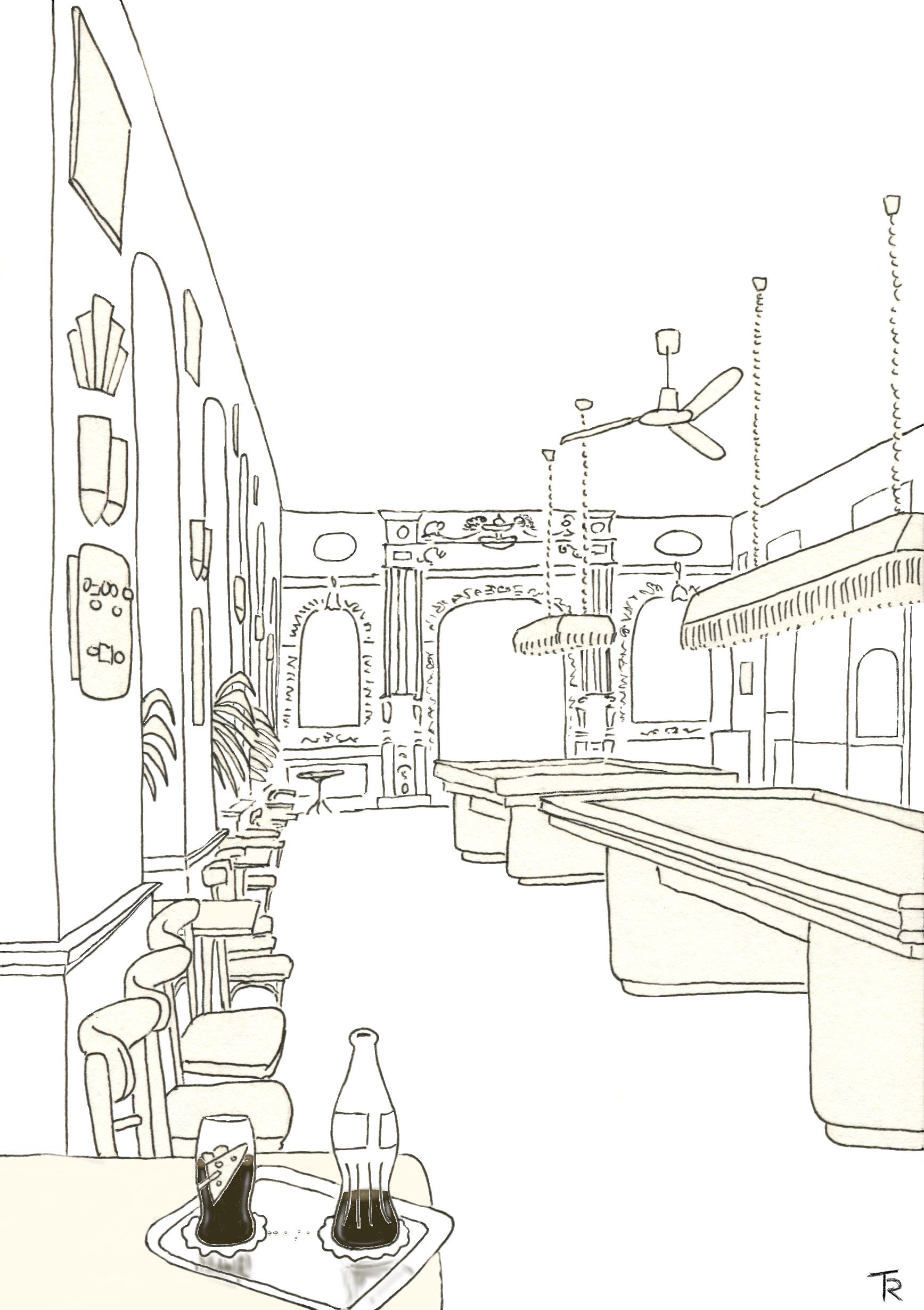
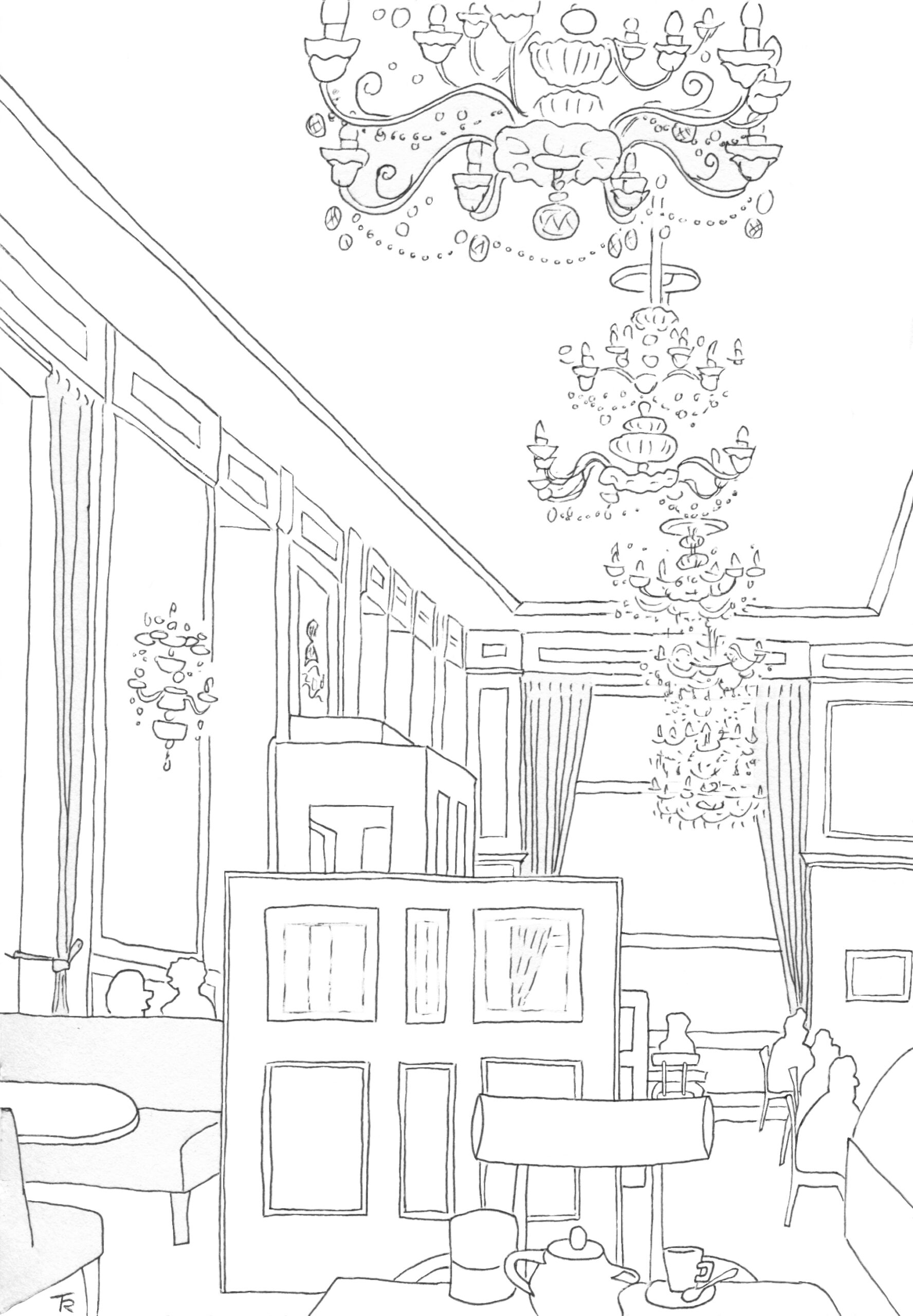
In der großartigen Schalterhalle der alten Postsparkasse, von Otto Wagner als Art-Deco-Tempel gestaltet, wird heute nur noch kleines Geld getauscht, nämlich im gleichnamigen Café. Vorher empfiehlt sich ein Gang durch die Gänge des Gebäudes, das von der Universität für angewandte Kunst genutzt, oder muss man sagen: angewandt wird. Der Kundige wird dabei im Untergeschoss an die Mysterienabteilung erinnert werden, und wenn nicht, dann zumindest ein paar skurrile Einblicke genießen dürfen. Anschließend genießt man im Café das eine oder das andere und außerdem, dass ein schöner Ort endlich zu sich selbst gekommen ist. Denn was ist schon die Gründung einer Sparkasse gegen einen Besuch im Kaffeehaus?

At Café Exchange in Vienna – In the magnificent counter hall of the old Postal Savings Bank, designed by Otto Wagner as an Art Deco temple, only small amounts of money are exchanged today, namely in the café of the same name. Beforehand, a stroll through the corridors of the building, which is used—or should we say, applied—by the University of Applied Arts is recommended. Those in the know will be reminded of the Department of Mysteries in the basement, and if not, at least be able to enjoy a few quirky insights. Afterwards, enjoy one thing or another in the café and also appreciate that a beautiful place has finally come into its own. After all, what is the founding of a savings bank compared to a visit to a coffee house?
Im Café Ritter in Wien

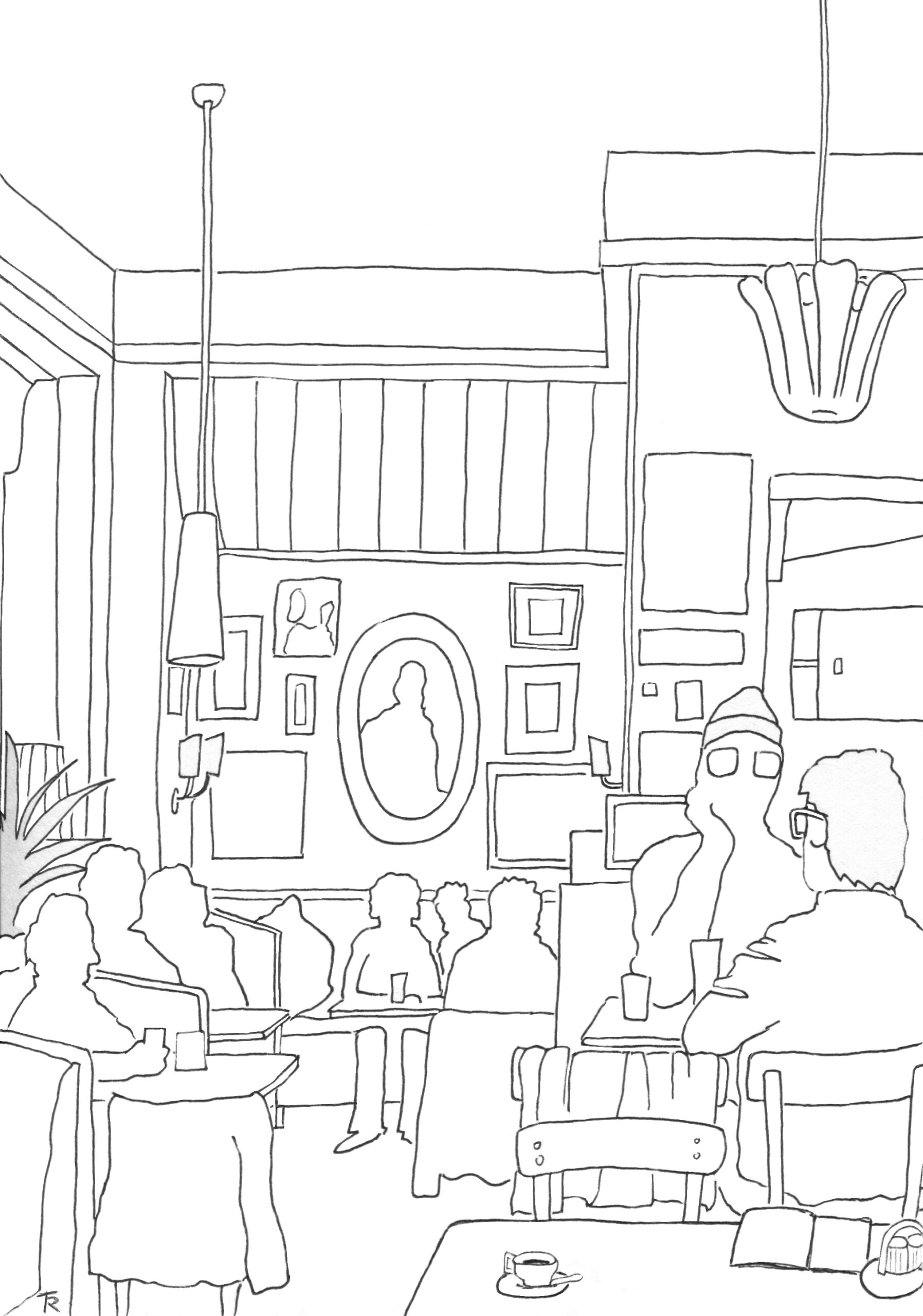
Am Nebentisch ein älteres Paar., beide in ihre Zeitungen vertieft. Er: „Der Baapst is wieder xund, oiso, wia ma hoit xund is, in dem Oita.“ Sie: „Ma is eh nie xund.“ Er: „Immahin kann er wieda rollen.“

At Café Ritter in Vienna – At the next table, an older couple, both engrossed in their newspapers. He: „The Pope is healthy again, well, as healthy as one can be at that age.“ She: „One is never healthy anyway.“ He: „At least he can roll again.“

Im Café Ritter in Wien

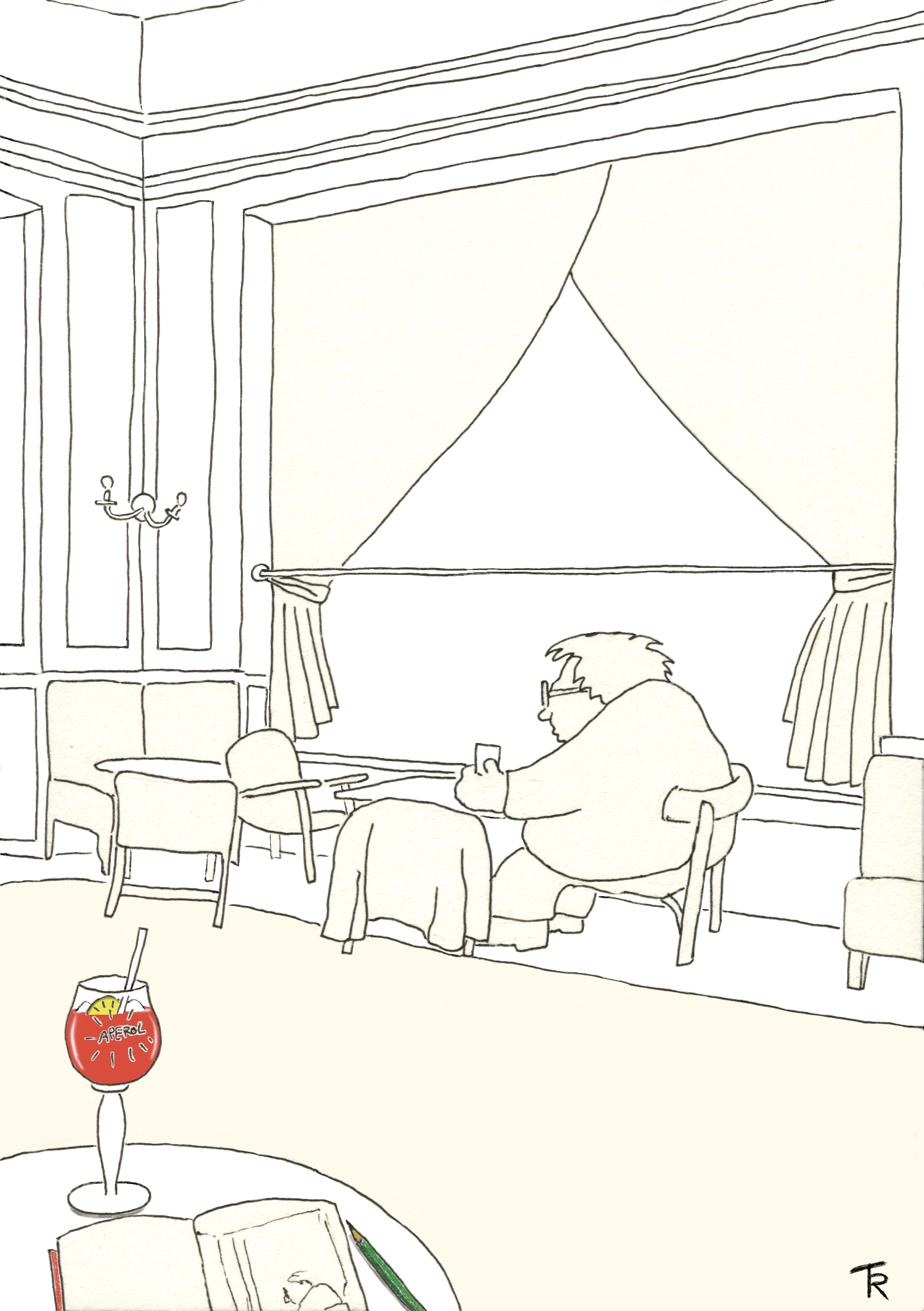
Der junge Herr Ober richtet direkt neben mir an und jedes Mal, wenn er etwas fertig gemacht hat, sagt er „So!“ Außerdem ist er ein Witzbold. Als er mir zu Mittag eine Cola bringt, fragt er neckisch: „Cola Rum?“ und als eine Dame, die allein ist, zahlen möchte, fragt er „Zusammen oder getrennt?“ Was man halt so macht, um sich die Arbeit angenehmer zu gestalten. Als eine spanische Familie in seinem Bereich sitzt, parliert er mehr schlecht als recht in fremder Zunge, und als sie gehen, ruft er ihnen ein fröhliches „Adios!“ nach und raunzt dann halblaut „Schleichts Euch!“ hinterher. Dann sagt er „So!“ und widmet sich der nächsten Aufgabe.

At Café Ritter in Vienna – The young waiter prepares right next to me, and every time he’s finished something, he says, „Well!“ He’s also a joker. When he brings me a Coke for lunch, he teasingly asks, „Rum Coke?“ And when a woman, alone, wants to pay, he asks, „Together or separately?“ The usual things you do to make work more pleasant. When a Spanish family sits in his area, he converses more or less in a foreign tongue, and as they leave, he calls out a cheerful „Adios!“ and then growls after them in a low voice, „Get lost!“ Then he says, „Well!“ and moves on to the next task.

Im Café Weingartner in Wien

Während in meiner Heimatstadt ein Besuch in einem Café meist bedeutet, dass man in einem winzigen Raum mit zu vielen aufgeregt plappernden jungen Familien zusammengepfercht auf Kindermöbeln hockend eine halbe Stunde auf einen simplen Kaffee warten muss, veranschaulicht das Café Weingartner den Unterschied zwischen Barbarei und Zivilisation. Hier kann man in einem großzügig bemessenen und dem Auge schmeichelnden Raum ungestört und beinfrei alles haben, was Zunge und Gaumen begehren, während einer mit Queue und Kugeln auf einem der Karamboltische Geräusche macht, die das Ohr nicht beleidigen.

At Café Weingartner in Vienna – While in my hometown, a visit to a café usually means waiting half an hour for a simple coffee in a tiny room with too many excitedly chattering young families crammed together on children’s furniture, Café Weingartner exemplifies the difference between barbarism and civilization. Here, in a spacious and pleasing-to-the-eye space, you can indulge in everything your tongue and palate desire, undisturbed and with your legs free, while someone makes noises that aren’t offensive to the ear with their cue and balls on one of the billiard tables.

Im Café W.I.F. in Wien

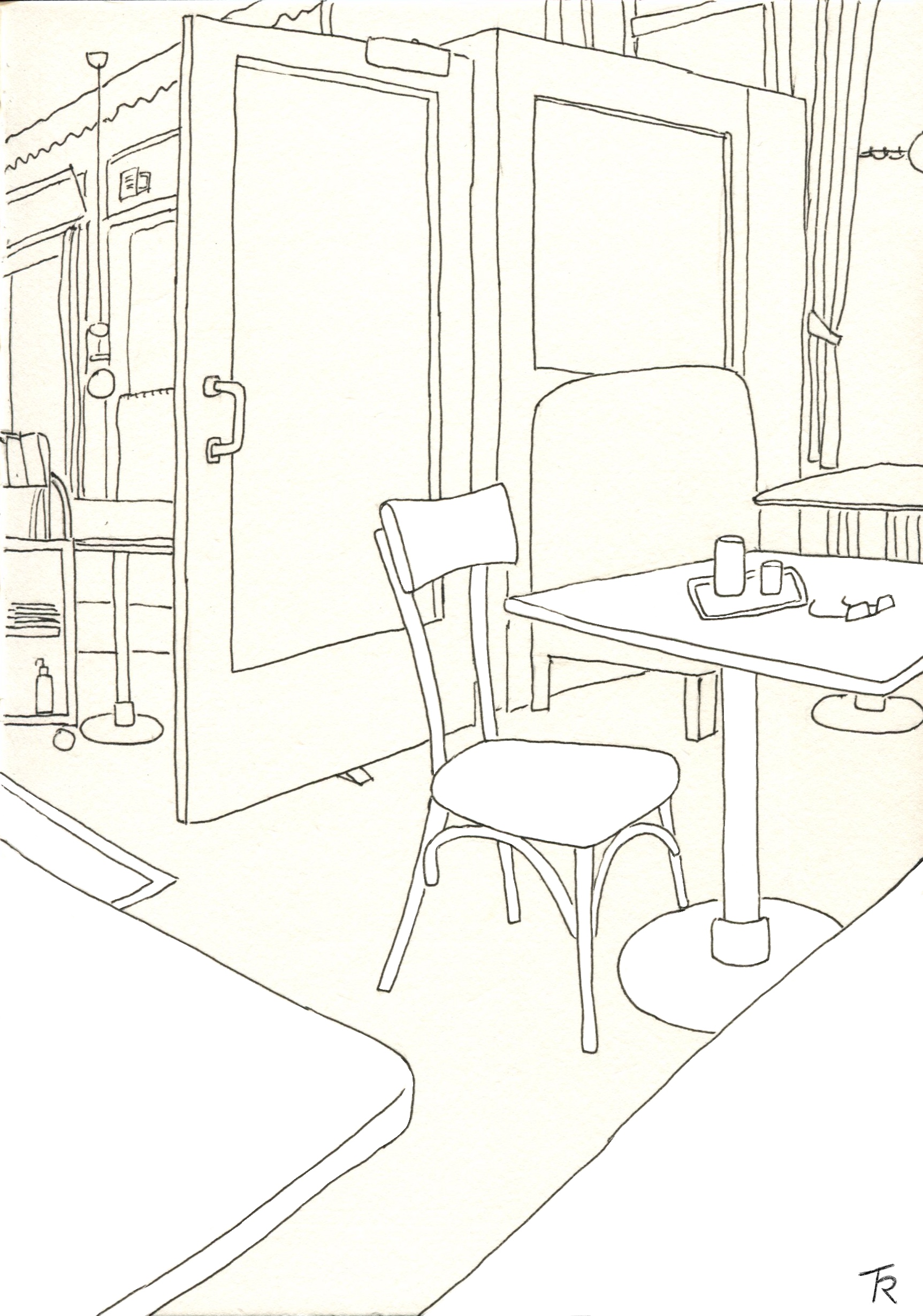
Auf der Landstraßer Hauptstraße gibt es neben der Rochuskirche ein kleines Espresso, das „W.I.F. – Welt im Film“ heißt. Das leinwandgroße Schild über dem Eingang ist wohl schon ein Hinweis auf den Ursprung des Namens und auf die Frage nach dessen Herkunft bestätigt die Bedienung, dass das Café früher ein Kino gewesen sei. Innen scheint nicht nur die Zeit hocken geblieben zu sein, auch die Gäste leisten ihr wohl seit einigen Jahrzehnten gute Gesellschaft. Vielleicht warten sie noch darauf, entdeckt zu werden, denn dies wäre genau der Ort, an dem E.T. Spira einen Film machen würde. Aber daraus wird leider nichts mehr. Dann wartet man eben weiter und schaut in der Zwischenzeit aus dem Fenster und den Fiakern zu, wie sie auf der Landstraßer Hauptstraße erst in die eine Richtung rollen und dann wieder in die andere. Wie im Film.

At Café W.I.F. in Vienna – On Landstraßer Hauptstraße, next to the St. Rochus Church, there’s a small espresso bar called „W.I.F. – World in Film.“ The screen-sized sign above the entrance is probably a clue to the origin of the name, and when asked about its origin, the waitress confirms that the café used to be a cinema. Inside, not only does time seem to have stood still, but the guests have also been keeping it company for several decades. Perhaps they’re still waiting to be discovered, because this would be exactly the place where E.T. Spira would make a film. But unfortunately, that’s not going to happen. So you just keep waiting and, in the meantime, watch out the window and the horse-drawn carriages rolling down Landstraßer Hauptstraße, first in one direction and then back again. Just like in a movie.

Im Café Bräunerhof in Wien

Die beiden älteren Herren rechts und links neben mir blättern lautstark und rasch in ihren Zeitungen. Wie man bei diesem Tempo überhaupt etwas lesen kann, ist mir schleierhaft. Abwechselnd steht einer auf und holt sich eine andere Lektüre. Vielleicht ist es eine Art Wettbewerb?

At Café Bräunerhof in Vienna – The two elderly gentlemen to my right and left are flicking through their newspapers loudly and quickly. How anyone can read anything at that pace is beyond me. They take turns getting up and picking up another paper. Perhaps it’s some kind of competition?

Im Café am Heumarkt in Wien

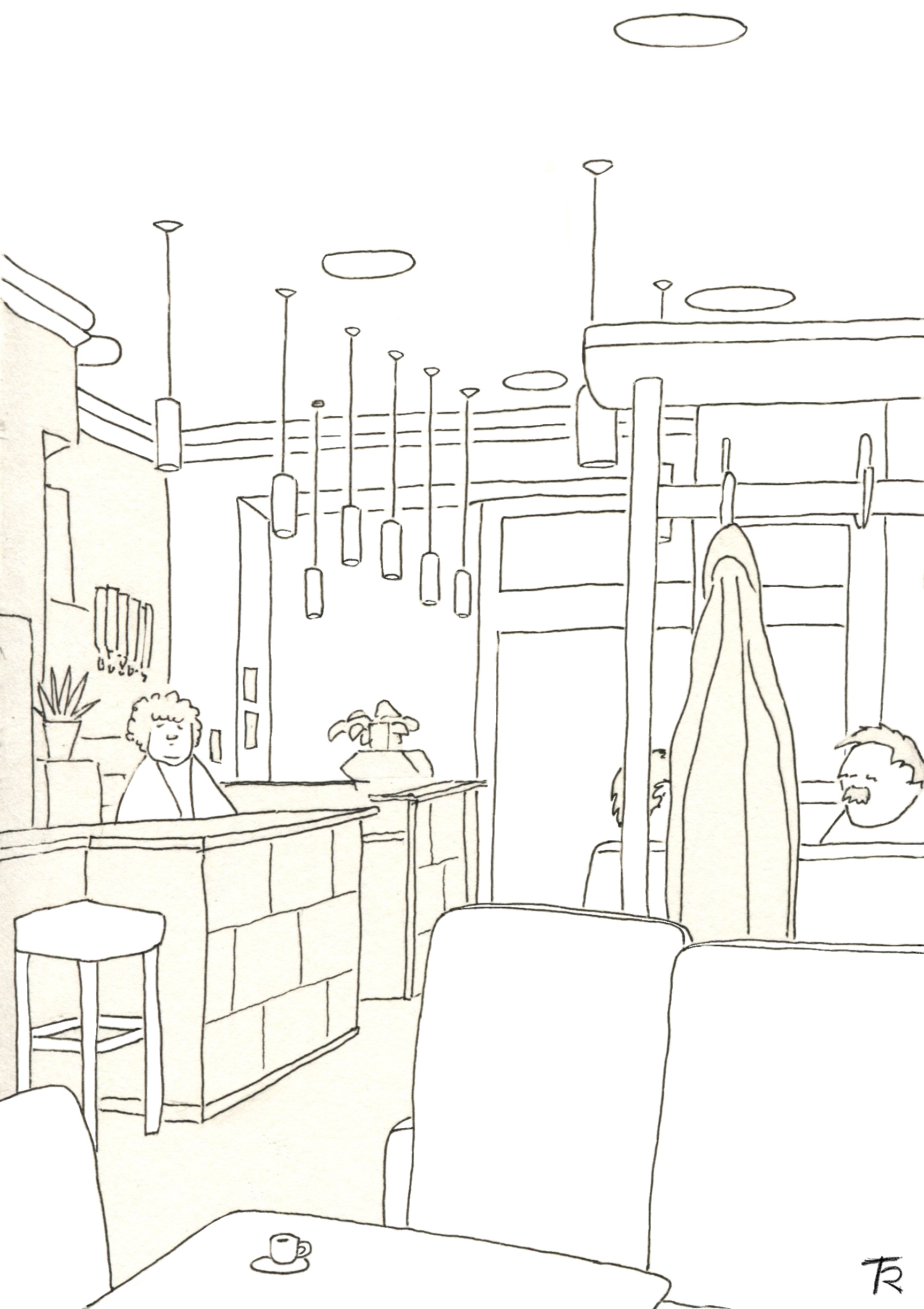
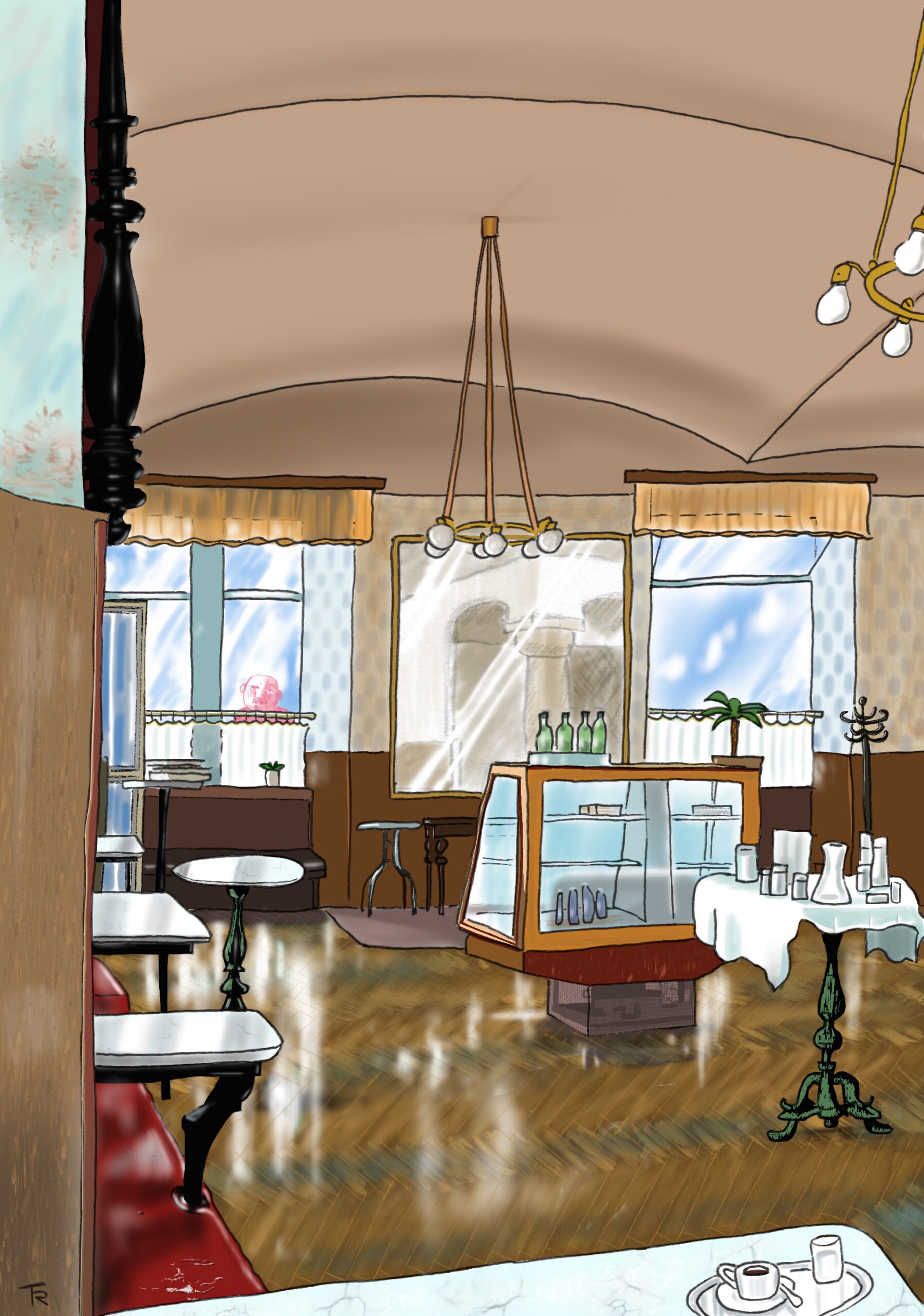
Das Café wurde, als die Benzinkutschen die Macht übernommen haben, an den Rand gedrängt, und da befindet es sich heute noch, am Straßenrand, ein Eckensteher, der darauf wartet, dass etwas passiert. Drinnen passiert aber auch nicht mehr viel. Zwei ältere Herren sitzen Schulter an Schulter an zwei Tischen, rascheln gemeinsam in ihren Zeitungen und nippen abwechselnd ihre Achtel leer. Auf dem Billardtisch spielt nur noch das Licht, der Koch fläzt gelangweilt im Durchgang zur Küche, während im Hintergrund eine alte Frau mit etwas klappert. Ein gebeugter grauer Ober wackelt den Kaffee herüber, der auf dem Weg ein paar Grad kälter werden wird. Ein angedeutetes Lächeln, ein Glas Wasser und ein Keks erinnern daran, dass trotz allem die Form gewahrt werden muss. Das rote Leder der Sitzbänke ist brüchig geworden und die letzten Gäste werden irgendwann nicht mehr kommen, denn so viele wachsen leider nicht nach, die den Charme des Morbiden zu schätzen wissen.

At the Café am Heumarkt in Vienna – The café was pushed to the sidelines when the petrol-powered carriages took over, and there it is today, on the side of the road, a corner stander waiting for something to happen. But not much is happening inside either. Two older men sit shoulder to shoulder at two tables, rustling through their newspapers together and taking turns sipping their wineglasses empty. The only one playing on the pool table is the light, the cook lounges bored in the passage to the kitchen, while an old woman clatters something in the background. A hunched gray waiter totters over the coffee, which will get a few degrees colder on the way. A hint of a smile, a glass of water and a biscuit remind us that, despite everything, the form must be maintained. The red leather of the benches has become brittle and the last guests will stop coming at some point, because unfortunately there are not enough new generations to appreciate the charm of the morbid.

Im Café Mozart in Wien

Als der berühmte Pferdemetzger Mozart in Wien einmal ins Kaffeehaus gehen wollte, da empfahl man ihm das Lokal gegenüber der Albertina. „Na sowas!“ rief Mozart überrascht, als er dort ankam, „Das heißt ja wie ich! Café Mozart!“ Seitdem erzählt er in Pferdemetzgerkreisen stets und gerne, man habe in Wien sogar ein Kaffeehaus nach ihm benannt. Tatsächlich jedoch verhält es sich ganz anders, denn gegründet wurde das Lokal von dem Erfinder der berühmten Kugeln, mit denen noch heute fast überall auf der Welt in öffentlichen Parks alte Männer nach anderen Kugeln werfen. Was man eben so macht, wenn man viel Zeit hat.

At Café Mozart in Vienna – When the famous horse butcher Mozart once wanted to go to a coffee house in Vienna, the place opposite the Albertina was recommended to him. Mozart exclaimed in surprise when he got there, „It’s called the same as me! Café Mozart!“ Since then, he has always been happy to tell horse butcher circles that a coffee house in Vienna was even named after him. In reality, however, things are quite different, because the place was founded by the inventor of the famous balls that old men still use to throw at other balls in public parks almost everywhere in the world. What you do when you have a lot of time.

Im Café Korb in Wien

Das Café Korb ist der bevorzugte Ort der Wiener sowohl für blind dates als auch für ältere Ehepaare, die wissen, dass es keinen Sinn mehr hat. Man kann aber auch einfach so hingehen.

At Café Korb in Vienna – Café Korb is the Viennese’s favorite place for both blind dates and older couples who know that there’s no point anymore. But you can also go there offhandedly. (wordplay with the expression for ‚turning so. down‚)