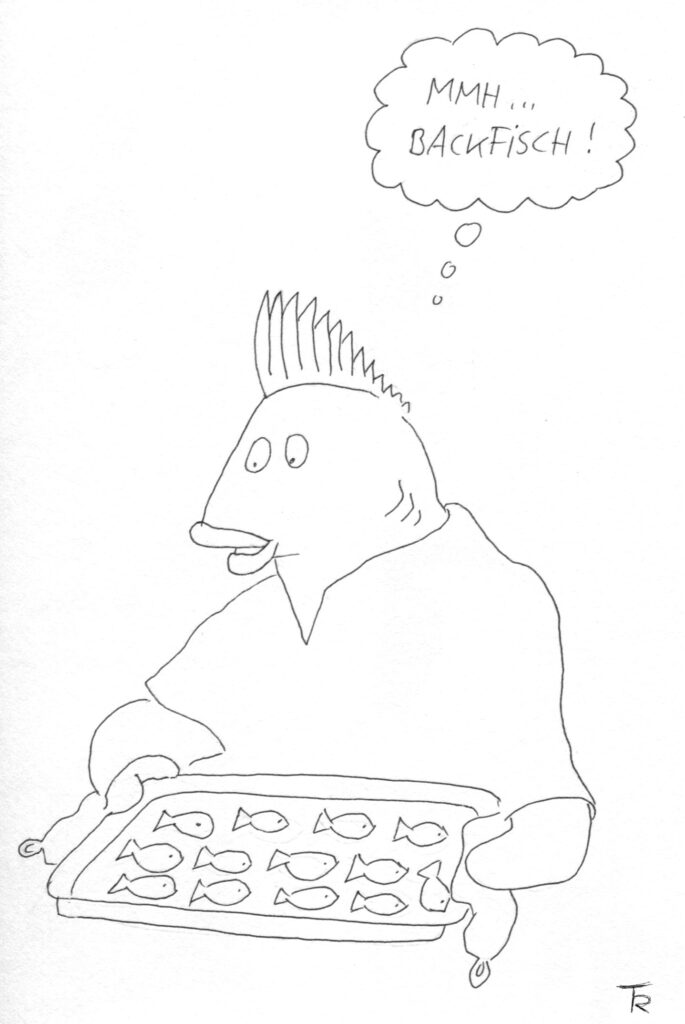
Backing bass – „Mmm. Baked fish.“

Texte und Bilder /// Texts and Images
Backing bass – „Mmm. Baked fish.“

The animal in me

Kein Kaffeehaus, aber zwischen zwei kleinen Braunen braucht man hin und wieder ein gutes Schnitzel. Der etwas aufgeschwemmte Kellner sieht naturgemäß aus wie Qualtingers Herr Karl, er redet aber zum Glück nicht so viel. Die andere Bedienung stellt mir ebenso wortlos einen Espresso hin, den ich nicht bestellt habe, und nimmt ihn wieder mit, als ich ihn trinken will. Vermutlich hat sie mir angesehen, dass ich gerade Kaffeejause hatte und keinen Kaffee brauchte. Wenn ich einen Kaffee bräuchte, würde ich auch lieber ins Sperl gehen, wo es tatsächlich einen Herrn Karl gibt, der aber nicht aussieht wie der Herr Karl, nicht mal wie ein junger Qualtinger. Wien scheint gerade a bissl durcheinander zu sein. – Endlich bringt der falsche Herr Karl ein richtiges Schnitzel und alles ist wieder gut.
At the Pfudl in Vienna – Not a coffee house, but between two espressos you need a good schnitzel every now and then. The somewhat bloated waiter naturally looks like Qualtinger’s Herr Karl, but thankfully he doesn’t talk as much. The other waitress, just as silently, puts an espresso I didn’t order in front of me and takes it away when I’m about to drink it. She probably noticed that I was just having a coffee break and didn’t need it. If I needed a coffee, I’d rather go to the Sperl, where there actually is a Herr Karl, but he doesn’t look like Herr Karl, not even like a young Qualtinger. Vienna seems to be a bit confused right now. Finally, the fake Herr Karl brings me a proper schnitzel, and everything is fine again.
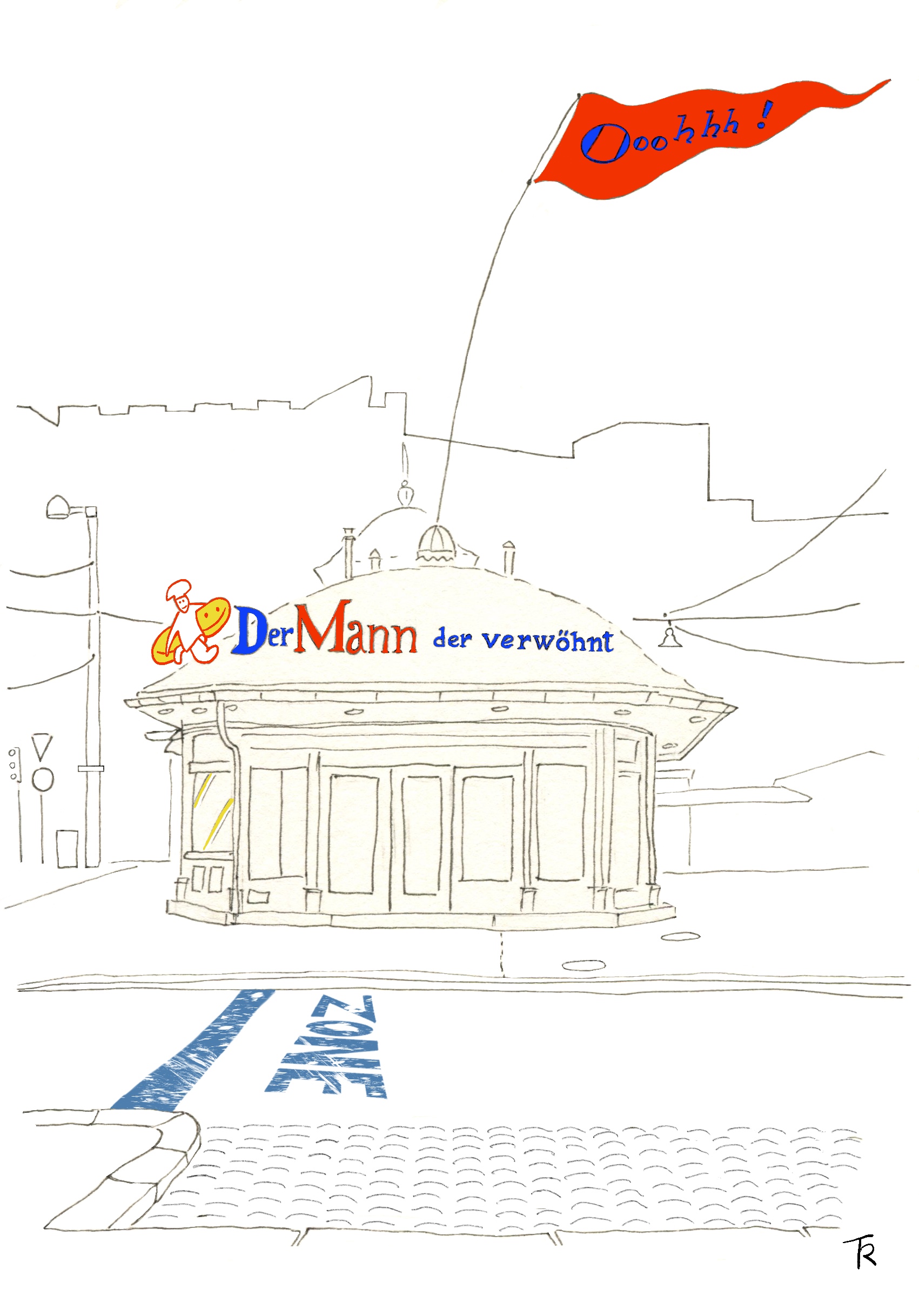
An der Kette mit dem komischen Namen kommt man in Wien nicht vorbei, bzw. man kommt ständig an ihr vorbei, weil es in Wien und darüber hinaus gefühlt ca. 10.000 Filialen gibt, von denen vermutlich keine ein Sexshop ist, was ich aber nicht aus erster Hand bezeugen kann. In der Niederlassung am Naschmarkt, wo ich einen Espresso nehme und eine Flasche Wasser kaufe, fragt mich die hübsche Bedienung mit kokettem Augenaufschlag: „Frische Croissants?“ Ich würde eigentlich gerne ‚Ja’ sagen, aber am Ende könnte sie das falsch verstehen.
The Man Who Pampers – You can’t miss the chain with the strange name in Vienna, or rather, you pass it constantly, because there are what feels like about 10,000 branches in Vienna and beyond, probably none of which is a sex shop, although I can’t verify this firsthand. In the branch at Naschmarkt, where I’m getting an espresso and buying a bottle of water, the pretty waitress asks me with a flirtatious glance: „Fresh croissants?“ I’d actually like to say ‚yes,‘ but she might end up misunderstanding me.

Goethe’s birthday again – It get’s boring.

Nonsense doodle – Mariakron (a brandy)

In der großartigen Schalterhalle der alten Postsparkasse, von Otto Wagner als Art-Deco-Tempel gestaltet, wird heute nur noch kleines Geld getauscht, nämlich im gleichnamigen Café. Vorher empfiehlt sich ein Gang durch die Gänge des Gebäudes, das von der Universität für angewandte Kunst genutzt, oder muss man sagen: angewandt wird. Der Kundige wird dabei im Untergeschoss an die Mysterienabteilung erinnert werden, und wenn nicht, dann zumindest ein paar skurrile Einblicke genießen dürfen. Anschließend genießt man im Café das eine oder das andere und außerdem, dass ein schöner Ort endlich zu sich selbst gekommen ist. Denn was ist schon die Gründung einer Sparkasse gegen einen Besuch im Kaffeehaus?
At Café Exchange in Vienna – In the magnificent counter hall of the old Postal Savings Bank, designed by Otto Wagner as an Art Deco temple, only small amounts of money are exchanged today, namely in the café of the same name. Beforehand, a stroll through the corridors of the building, which is used—or should we say, applied—by the University of Applied Arts is recommended. Those in the know will be reminded of the Department of Mysteries in the basement, and if not, at least be able to enjoy a few quirky insights. Afterwards, enjoy one thing or another in the café and also appreciate that a beautiful place has finally come into its own. After all, what is the founding of a savings bank compared to a visit to a coffee house?
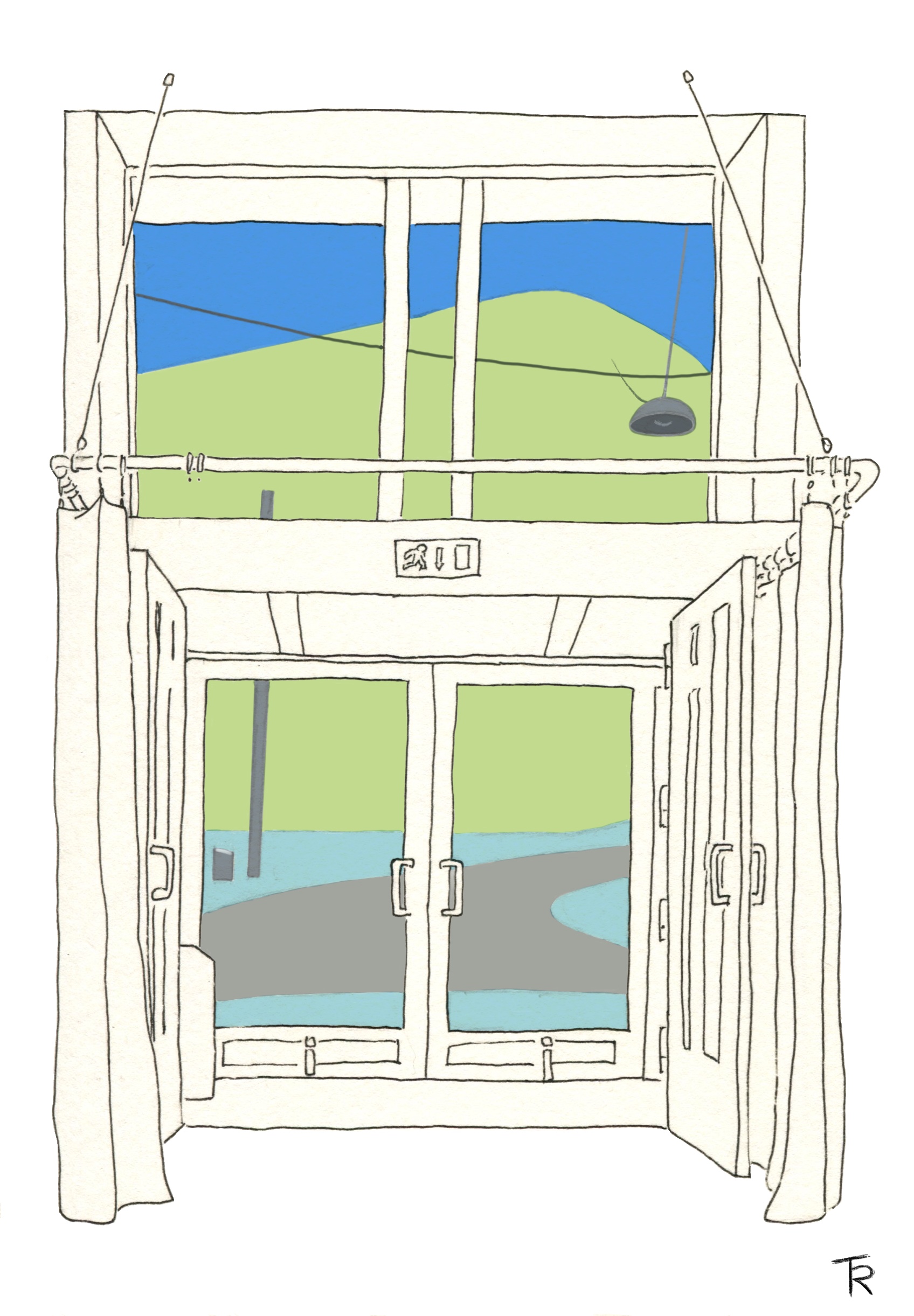
Am Nebentisch ein älteres Paar., beide in ihre Zeitungen vertieft. Er: „Der Baapst is wieder xund, oiso, wia ma hoit xund is, in dem Oita.“ Sie: „Ma is eh nie xund.“ Er: „Immahin kann er wieda rollen.“
At Café Ritter in Vienna – At the next table, an older couple, both engrossed in their newspapers. He: „The Pope is healthy again, well, as healthy as one can be at that age.“ She: „One is never healthy anyway.“ He: „At least he can roll again.“
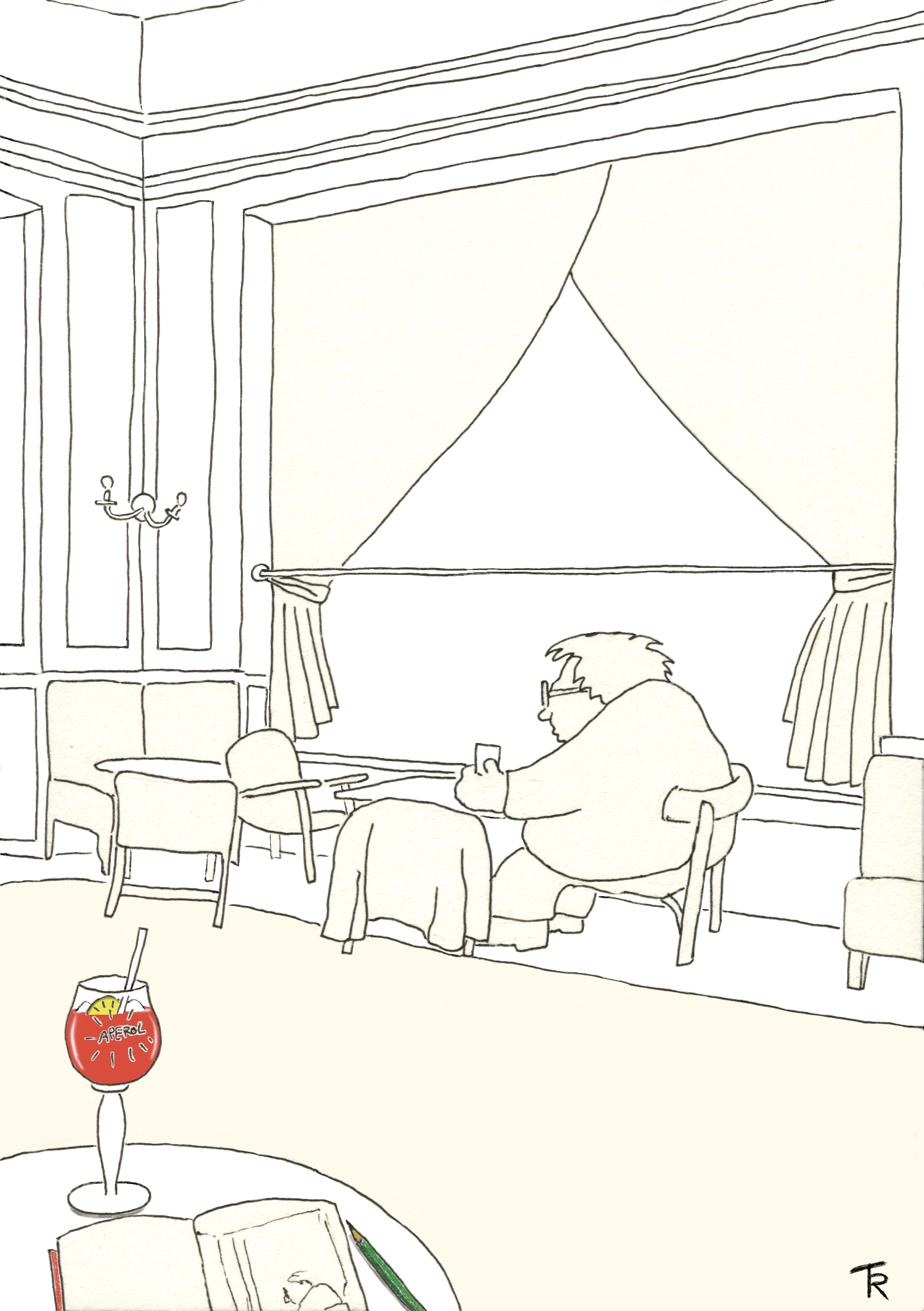
Der junge Herr Ober richtet direkt neben mir an und jedes Mal, wenn er etwas fertig gemacht hat, sagt er „So!“ Außerdem ist er ein Witzbold. Als er mir zu Mittag eine Cola bringt, fragt er neckisch: „Cola Rum?“ und als eine Dame, die allein ist, zahlen möchte, fragt er „Zusammen oder getrennt?“ Was man halt so macht, um sich die Arbeit angenehmer zu gestalten. Als eine spanische Familie in seinem Bereich sitzt, parliert er mehr schlecht als recht in fremder Zunge, und als sie gehen, ruft er ihnen ein fröhliches „Adios!“ nach und raunzt dann halblaut „Schleichts Euch!“ hinterher. Dann sagt er „So!“ und widmet sich der nächsten Aufgabe.
At Café Ritter in Vienna – The young waiter prepares right next to me, and every time he’s finished something, he says, „Well!“ He’s also a joker. When he brings me a Coke for lunch, he teasingly asks, „Rum Coke?“ And when a woman, alone, wants to pay, he asks, „Together or separately?“ The usual things you do to make work more pleasant. When a Spanish family sits in his area, he converses more or less in a foreign tongue, and as they leave, he calls out a cheerful „Adios!“ and then growls after them in a low voice, „Get lost!“ Then he says, „Well!“ and moves on to the next task.
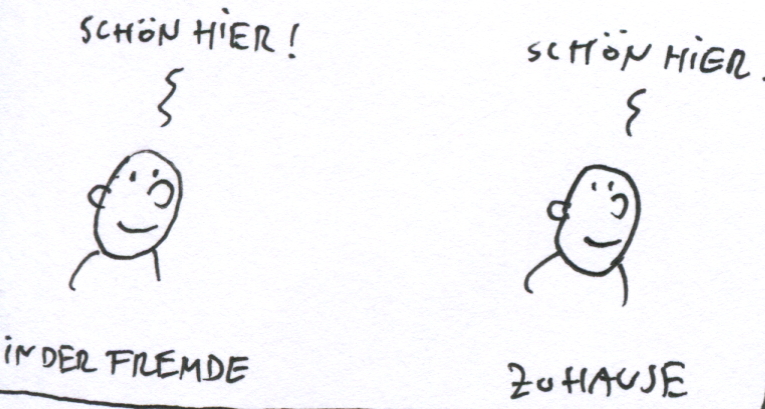
Contrast – Abroad, „It’s beautiful here!“ / Home, „It’s beautiful here.“