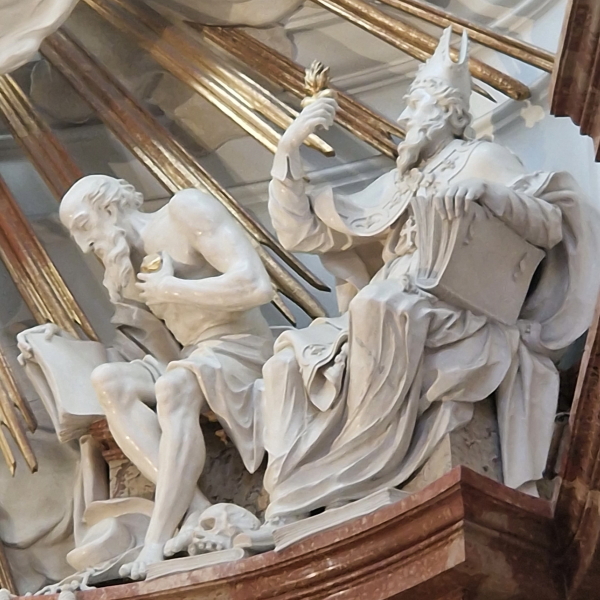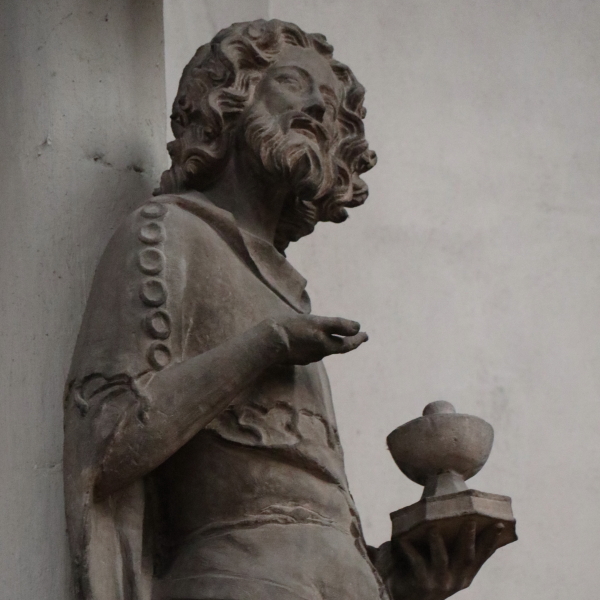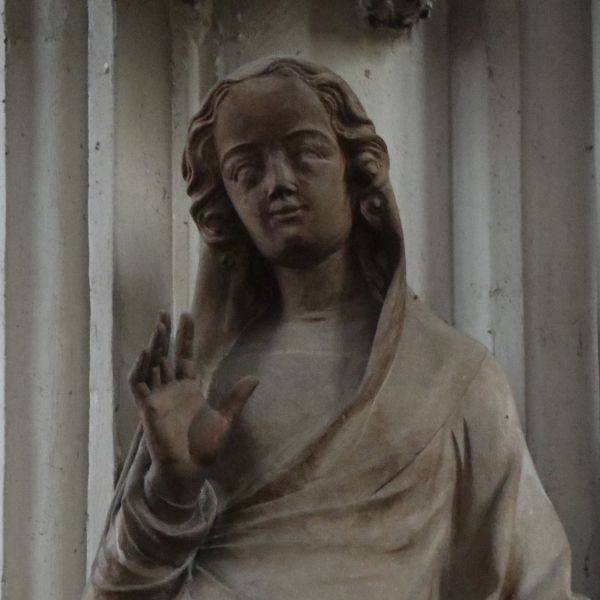
„Jetzt schau dir den an!“
„Um Himmels Willen!“
Stones look at me
„Now look at that!“
„For heaven’s sake!“
(In the Natural History Museum in Vienna)
Texte und Bilder /// Texts and Images

Der sogenannte Narrenturm auf dem Gelände des Alten Allgemeinen Krankenhauses beherbergt das Pathologisch-anatomische Bundesmuseum. In einem der Schaukästen befindet sich dieses Präparat: Ein mit 5 Jahren verstorbenes Mädchen, das unter einem Wasserkopf und Rachitis gelitten hat.
At the Narrenturm in Vienna
The so-called Fool’s Tower on the site of the Old General Hospital houses the Federal Pathological-Anatomical Museum. This preparation is in one of the showcases: a girl who died at the age of 5 and suffered from a water head and rickets.
Neulich wurde mir bewusst, worin der wesentliche Unterschied zwischen Österreich und Deutschland besteht. Unter den Sitzen deutscher Züge ist genügend Platz für das Handgepäck, da der Deutsche, sobald er sich in einem Zug bewegt, gerne in Tupperdosen verstaute Eier, Zwiebeln und mit reichlich Knoblauch gewürzte Frikadellen griffbereit hat. Die anderen Fahrgäste sollen ja auch was davon haben. In deutschen Zügen gibt es daher nur sog. „Bord-Bistros“, in denen man zwar nichts Essbares bekommt, aber meistens einen Stehplatz. Im österreichischen Eurocity dagegen gibt es einen Speisewagen, in dem man nicht immer einen Platz bekommt, da dort wohlschmeckende und frisch zubereitete Speisen auf richtigen Tellern bis an den Tisch serviert werden. Dafür ist unter den Sitzen gerade genügend Platz, um ein Wiener Schnitzel zu verstauen, das bekanntlich sehr dünn geklopft wird. Aber da ein gutes Schnitzel naturgemäß nicht verstaut, sondern sofort gegessen wird, ist das auch schon wieder völlig wurscht.
Ethnology
Recently I realized what’s the essential difference between Austria and Germany. Under the seats of German trains there is enough space for hand luggage, as the German, as soon as he moves in a train, likes it to have at hand a lot of Tupperware where he stows eggs, onions and meatballs, spiced with plenty of garlic. The other passengers should also profit by it. In German trains, there are only so-called „Board bistros“, in which one gets nothing edible, but mostly a stance. In Austrian Eurocity, on the other hand, there is a dining car where you do not always get a seat, as tasty and freshly prepared dishes are served on proper plates right to your table. Under the seats there is just enough space to stow a Wiener Schnitzel, which is known to be tapped very thin. But since a good Schnitzel naturally is not stowed but eaten immediately, one couldn’t care less.

Im Atrium des Leopold Museum in Wien pausierend, erschöpft von Klimt und Schiele, neide ich dem Bau Höhe und Volumen und überlege, wie viele Regalmeter sich hier aufbauen ließen, da zuhause die Bücher schon wieder in zweiter Reihe stehen.
Length times width times height – In the atrium of the Leopold Museum in Vienna pausing, exhausted by Klimt and Schiele, I envy the building height and volume and consider how many shelves could be built here, since at home the books are in two rows.

Trinity? I can do it alone!

Ihrer Heiratspolitik hatten die Habsburger nicht nur die Herrschaft über die halbe Welt zu verdanken, sondern auch, da vorzüglich die Verwandtschaft geehelicht wurde, eine über die Jahrhunderte zunehmende Überentwicklung des Unterkiefers, die sog. „Habsburger Unterlippe“. Das Kunsthistorische Museum in Wien ist darum ein Paradies für Kieferchirurgen, denn die Habsburger hatten offenbar keine Scheu, sich auf Leinwand und in Stein naturgetreu abbilden zu lassen. Kaiser Leopold I. scheint sogar nicht wenig stolz darauf gewesen zu sein. Mit Sicherheit war er auf jeder Party der einzige, der mit der Zunge in der Nase bohren konnte.
Natural talent – The Habsburgs owed their marriage policy not only the rule of half the world, but also, since especially relatives were married, an over the centuries increasing overdevelopment of the lower jaw, the so-called „Habsburg lower lip“. The Kunsthistorisches Museum in Vienna is therefore a paradise for oral surgeons, because the Habsburgs were apparently not afraid to be reproduced on canvas and in stone true to nature. Emperor Leopold I even seems to have been a little proud of it. He was certainly the only one at any party who could pick his nose with his tongue.

Neulich war ich sehr früh im Kunsthistorischen Museum in Wien und schaffte es tatsächlich, ein paar Minuten allein zu sein mit Caravaggios Rosenkranzmadonna. Die Madonna ist natürlich wunderschön und das ganze Bild ein Meisterwerk, aber mein liebstes Detail sind die schmutzigen Füße, die dem Betrachter ins Gesicht ragen. Ich glaube, Caravaggio hatte seinen Spaß dabei.
Without shoes in Vienna – Recently I was very early in the Kunsthistorisches Museum in Vienna and actually managed to be alone for a few minutes with Caravaggio’s Rosary Madonna. The Madonna is of course beautiful and the whole picture a masterpiece, but my favorite detail is the dirty feet that stick to the viewer’s face. I think Caravaggio had fun with it.

Recently at the Vienna Central Cemetery – Please do not disturb

„Scheef! Aan hob I no.“
„Herst! Schleich di mit de g’schissna Schädel! Oida, bin I a Fundbüro?“
Recently at the KHM in Vienna – Boss! I have one more. – Fuck off with your fucking skulls! Am I a lost property office?